
Noticing sudden patches of hair loss on your child’s scalp can be worrying, but you’re not alone—patchy hair loss is actually common in children, and in most cases, it can be effectively treated once the cause is identified.
⭐ Common Causes of Patchy Hair Loss in Children
1. Tinea Capitis (Scalp Ringworm) – The Most Common Cause
Tinea capitis is a fungal infection that affects the scalp and hair shafts. Despite its name, it is not caused by worms—it is due to dermatophyte fungi that thrive in warm, humid environments.
Signs you may notice:
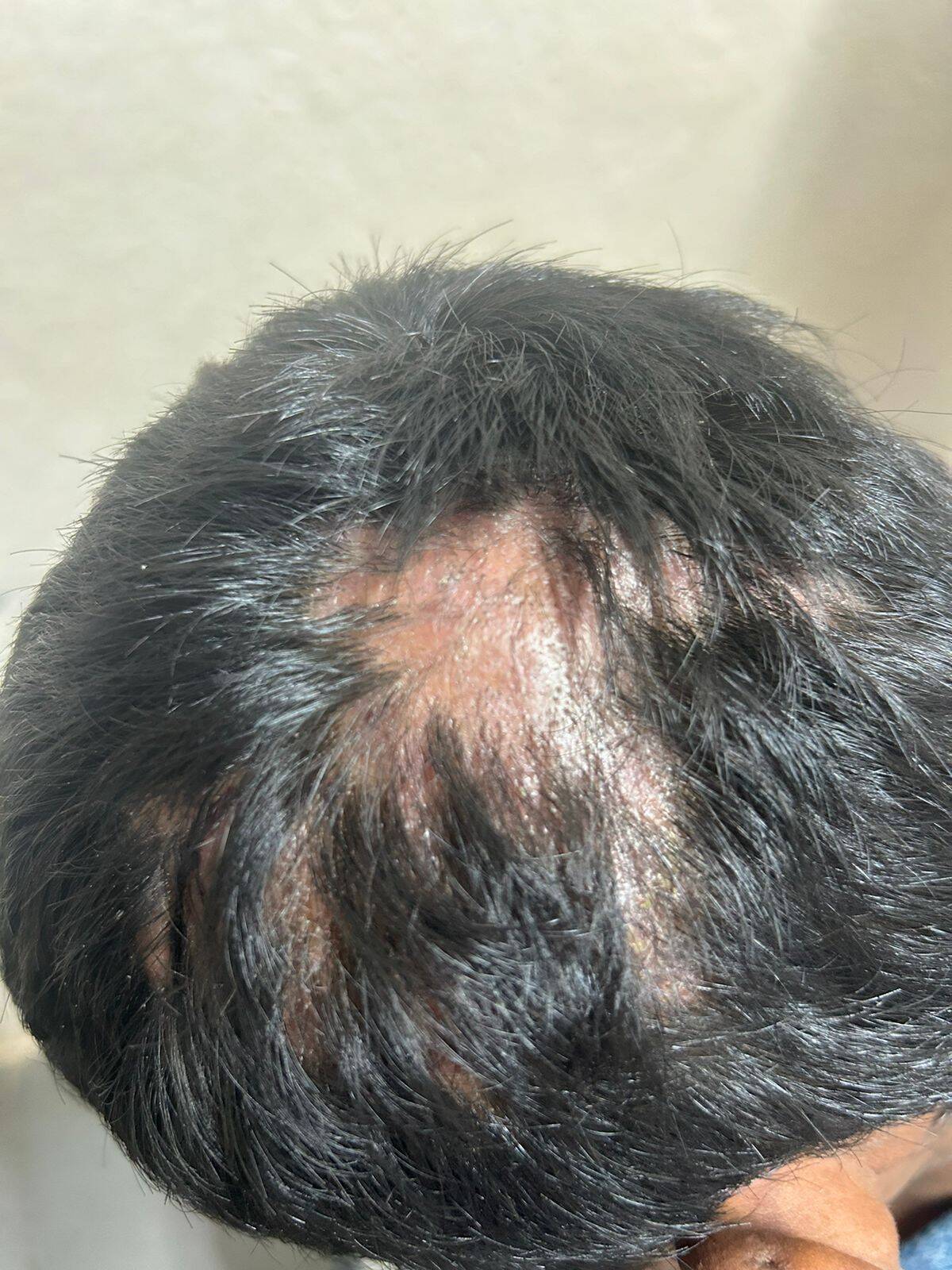
Round or irregular bald patches
White or grey scaling (similar to dandruff)
Hair broken off at the scalp (“black dot” appearance)
Redness or itching
A tender, swollen, pus-filled lump (called a kerion) in severe cases
It spreads easily through:
Direct contact with infected individuals
Sharing combs, brushes, hats, towels, or pillowcases
Pets that may carry fungal spores
Tinea capitis is commonly seen in children aged 3–10 years.
2. Alopecia Areata
This is an autoimmune condition where the body mistakenly attacks hair follicles.
How it looks:
Smooth, round patches of total hair loss
No scaling, redness, or broken hairs
The skin looks normal and healthy
Alopecia areata can appear suddenly and may come and go.
3. Trichotillomania (Hair-Pulling Habit)
Some children develop a habit of pulling or twisting their hair, often linked to stress, anxiety, or behavioural triggers.
Clues to look for:
Patches are irregular or uneven
Hairs of different lengths in the same area
The child may deny pulling due to embarrassment
4. Traction Alopecia
This happens when hair is pulled too tightly, often due to certain hairstyles such as:
Tight ponytails
Braids
Buns
Hair extensions
Hair loss typically appears around the hairline or temples.
🩺 When Should You See a Doctor?
Consult a pediatrician or dermatologist if you observe:
Any bald patch on your child’s scalp
Scaling, redness, or itching
Painful or swollen areas
Rapidly spreading patches
Signs of infection (pus, discharge, fever)
If hair loss continues despite changing hair habits
Early diagnosis is important, especially for fungal infections that can spread to family members.
🔍 How Patchy Hair Loss Is Diagnosed
During the consultation, the doctor may:
Examine the scalp under magnification
Look for broken hairs, scaling, or inflammation
Perform a scalp scraping or pluck a few hairs for lab testing
Use a Wood’s lamp (special light) to detect certain fungal species
This helps confirm the exact cause and guides the correct treatment.
💊 Treatment Options
For Tinea Capitis:
Oral antifungal medication (usually 4–8 weeks) — essential because the fungus lives inside the hair shaft
Antifungal shampoo to reduce spread
Avoiding sharing combs, hats, pillows
Topical creams alone are not effective.
For Alopecia Areata:
Observation for mild cases
Corticosteroid creams or injections (depending on age)
Topical immunotherapy in some cases
Monitoring for recurrence
For Trichotillomania:
Behavioural therapy or counselling
Stress management techniques
Supportive parenting
For Traction Alopecia:
Avoid tight hairstyles
Allow the scalp to rest
Gentle hair care practices
Hair typically regrows once tension is removed
❤️ Supporting Your Child Emotionally
Hair loss can affect a child’s self-esteem. Here’s how you can help:
Reassure them that hair loss is common and treatable
Avoid blaming or scolding
Explain the condition simply and positively
Use hats, scarves, or headbands to boost confidence
Seek counselling for anxiety-related hair pulling
In most cases, children recover fully, and their hair grows back normally with timely treatment.
🌼 Final Thoughts
Patchy hair loss in children can have several causes, but with early evaluation and proper treatment, most children make a complete recovery. If you notice unusual hair loss, scaling, or bald patches, don’t wait—get a professional opinion.
A dermatologist can identify the root cause and create the right treatment plan, ensuring your child’s hair and confidence return to normal.