
Traditional home remedies for skin diseases are still commonly followed in many parts of India. While some traditional practices may appear harmless, applying unknown chemicals or strongly alkaline substances directly to diseased or damaged skin can result in serious complications.
At G Square Skin, Hair & Plastic Surgery Clinic in Hubli, we strongly encourage patients to seek an accurate diagnosis from a qualified dermatologist before applying home remedies or unknown substances to a skin problem.
What Is Barsodhu?
“Barsodhu” is a term used locally for a traditional practice in which a substance such as lime or another alkaline preparation is applied or written over an area affected by a skin disease.
The practice may be performed by traditional healers, family members, or individuals themselves because of the belief that it can “draw out,” “dry,” or stop the disease from spreading.
However, conditions such as shingles, fungal infections, eczema, psoriasis, acne, vitiligo, and warts have different medical causes and require different forms of treatment.
Applying a chemical substance over these conditions does not treat the underlying cause.
In fact, it may make diagnosis and treatment more difficult by damaging the skin further.
Why Is Calcium Hydroxide or Lime Dangerous for the Skin?
Calcium hydroxide, also known as hydrated lime or slaked lime, is an alkaline substance. Depending on its concentration, formulation, duration of contact, and the condition of the skin, exposure can cause significant irritation or burns.
The U.S. National Institute for Occupational Safety and Health lists skin and eye irritation, skin burns, and eye burns among the potential effects of calcium hydroxide exposure. Read the NIOSH calcium hydroxide safety information
Applying such a substance to skin that is already inflamed, blistered, infected, or damaged may potentially lead to:
- Chemical burns
- Severe irritant contact dermatitis
- Pain and burning sensation
- Redness and inflammation
- Blistering
- Painful ulcers
- Swelling
- Secondary bacterial infection
- Delayed wound healing
- Post-inflammatory hyperpigmentation or dark marks
- Permanent scars
- Damage to sensitive areas around the eyes
- Potentially serious eye complications if the substance enters or affects the eye
Applying chemicals near the eyelids, forehead, or nose is particularly concerning, especially when the original condition may already involve the nerves or structures around the eye.
A Real-Life Clinical Example: When a Home Remedy Made Shingles Worse
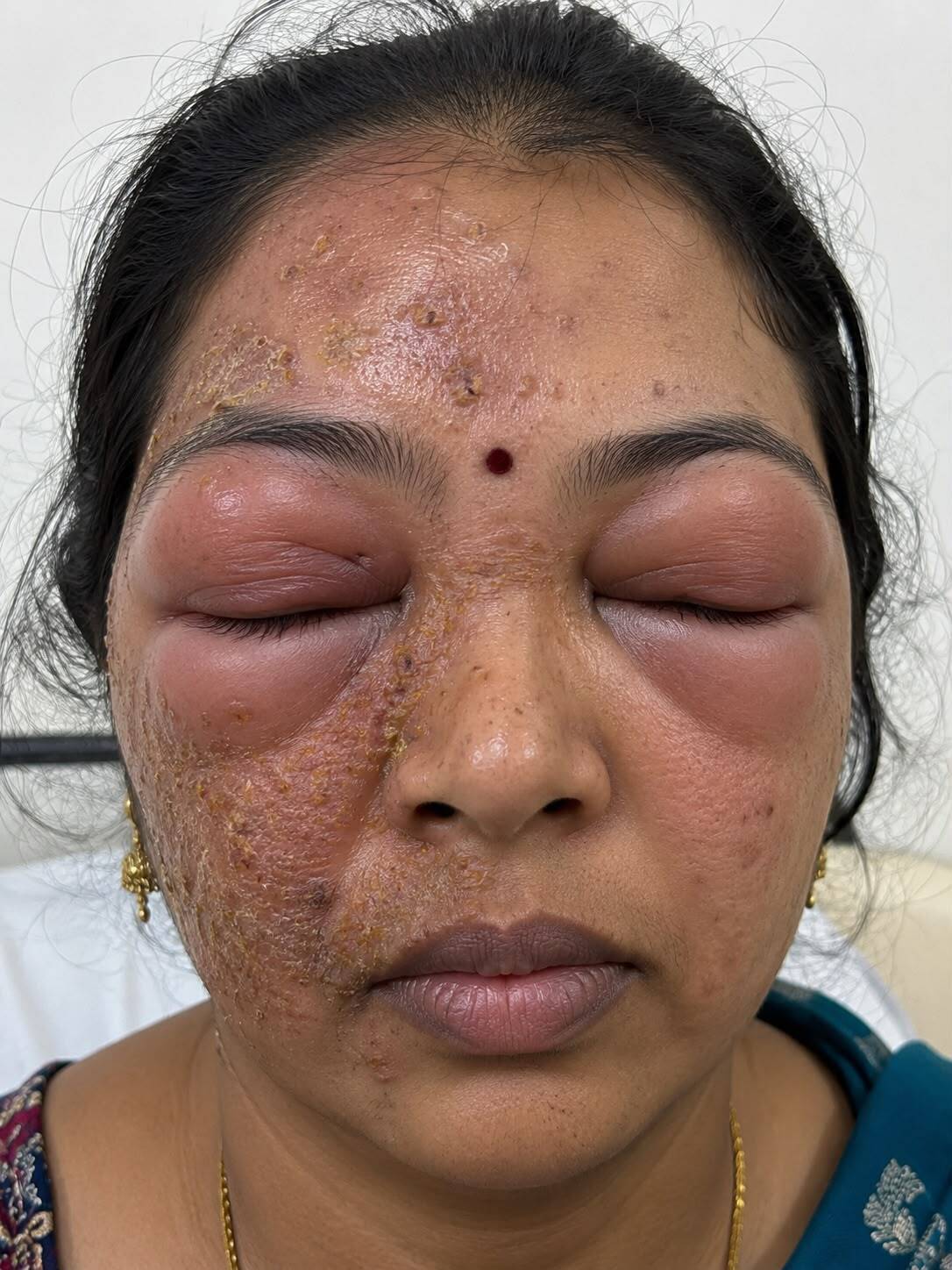
Recently, we treated a patient with herpes zoster involving a trigeminal nerve distribution on the face.
Herpes zoster, commonly known as shingles, is caused by reactivation of the varicella-zoster virus. When shingles affects the facial region—particularly areas around the forehead, nose, eyelids, or eyes—it requires prompt medical evaluation because eye complications can occur.
Instead of seeking early medical treatment, a traditional local remedy involving a lime-based alkaline substance was applied over the affected skin.
The result was severe.
The patient developed:
- Severe inflammatory and irritant contact dermatitis
- Significant swelling around both eyelids
- Extensive chemical injury to the skin
- Severe pain
- Difficulty opening the eyes
- Worsening inflammation over an already painful herpes zoster eruption
The patient required urgent dermatological assessment, appropriate medications, wound and skin care, and close follow-up.
The important lesson from this case is that the severity of the patient's condition was not due to herpes zoster alone. The harmful local chemical application caused additional skin injury and complicated an otherwise medically treatable condition.
What Is Herpes Zoster or Shingles?
Herpes zoster, commonly called shingles, occurs when the varicella-zoster virus—the same virus responsible for chickenpox—reactivates later in life.
Common symptoms of shingles include:
- Burning, tingling, or severe pain
- Increased skin sensitivity
- Painful fluid-filled blisters
- A rash commonly affecting one side of the body or face
- Headache or fever in some patients
In some people, the pain can continue even after the rash disappears. This condition is known as post-herpetic neuralgia.
When shingles occurs around the forehead, nose, eyelids, or eye, it may require urgent medical attention to reduce the risk of serious eye complications.
What Is the Right Treatment for Herpes Zoster?
People searching for herpes zoster treatment in Hubli, shingles treatment in Hubballi, or a dermatologist near me for shingles should seek professional medical assessment as early as possible.
Treatment may include, depending on the individual patient:
- Antiviral medicines prescribed by a doctor
- Appropriate pain management
- Proper skin and wound care
- Treatment for secondary infection when clinically necessary
- Eye examination or ophthalmology referral when the eye or surrounding areas are involved
- Follow-up for persistent nerve pain or other complications
Antiviral treatment for shingles is generally most effective when started early, particularly within the first 72 hours after symptoms or rash begin, although patients presenting later may still require medical evaluation and treatment based on their condition. Learn more about shingles diagnosis and treatment from the CDC
Do not delay medical care while experimenting with home remedies.
Which Skin Diseases Should Not Be Treated With Household Chemicals?
One of the most common mistakes seen in dermatology is treating an undiagnosed skin condition with random home remedies.
Avoid applying lime preparations, acids, kerosene, toothpaste, industrial chemicals, caustic substances, or unknown homemade mixtures to skin affected by:
Herpes Zoster or Shingles
Shingles requires early diagnosis and may require antiviral treatment. Facial or eye-area involvement requires particular attention.
Fungal Infections
Ringworm, jock itch, athlete's foot, and other fungal infections require appropriate antifungal treatment. Irritating chemicals can damage the skin without eliminating the fungal infection.
Eczema
Eczema involves inflammation and disruption of the skin barrier. Harsh chemicals can significantly worsen redness, itching, burning, and skin damage.
Psoriasis
Psoriasis is a chronic inflammatory skin disease. Unproven chemical applications can irritate existing plaques and trigger further inflammation.
Warts
Attempting to burn or destroy warts with household chemicals can damage healthy surrounding skin and lead to infection or scarring.
Vitiligo
Vitiligo requires proper dermatological assessment. Burning or irritating the skin will not safely restore pigmentation and may cause additional complications.
Acne and Pimples
Applying toothpaste, harsh chemicals, or irritating home mixtures to acne can cause inflammation, skin burns, pigmentation, and acne scars.
Skin Allergies
A skin allergy or contact dermatitis can become much worse when additional unknown substances are applied.
Burns and Open Wounds
Do not apply unverified chemicals or traditional preparations to burns, ulcers, or open wounds.
Insect Bites
Persistent swelling, severe allergic reactions, infection, or rapidly worsening symptoms after an insect bite should be medically assessed.
What Should You Do After an Accidental Chemical Exposure to the Skin?
If a potentially caustic chemical has been applied to the skin:
Remove the source of exposure and rinse the affected area promptly with plenty of clean water.
Do not try to “neutralize” an alkaline chemical by applying an acid or another household substance, as chemical reactions may cause further injury.
Seek urgent medical attention when:
- The face or eyes are involved
- There is severe pain
- Blisters or ulcers develop
- Swelling is increasing
- Vision is affected
- A large area of skin is involved
- The substance is unknown
- Symptoms continue or worsen after rinsing
Chemical exposure to the eyes should be treated as an emergency and requires immediate irrigation and urgent medical assessment.
When Should You See a Dermatologist Immediately?
Consult a qualified dermatologist or skin specialist if you notice:
- Painful blisters affecting one side of the face or body
- Burning pain followed by a blistering rash
- Shingles around the forehead, nose, eyelids, or eyes
- Severe swelling around the eyes
- Difficulty opening the eyes
- Vision changes
- Fever associated with a severe skin rash
- Rapidly spreading skin lesions
- Painful skin ulcers
- Pus or signs of secondary infection
- Severe burning after applying a home remedy
- Skin damage after exposure to lime or another chemical
People looking for a skin doctor in Hubli, dermatologist in Hubballi, skin specialist near me, chemical burn treatment in Hubli, or shingles treatment in Hubli should avoid delaying professional consultation when symptoms are severe or rapidly worsening.
Why Early Dermatologist Consultation Matters
Many skin diseases may look similar to an untrained eye but require completely different treatments.
For example:
- A fungal infection requires different treatment from eczema.
- Herpes zoster requires different management from an allergic rash.
- Psoriasis should not be treated like ringworm.
- Vitiligo requires a different approach from post-inflammatory pigmentation.
- A chemical burn requires different care from an infection.
Using the wrong treatment can mask symptoms, worsen the disease, delay healing, and increase the risk of complications.
A qualified dermatologist can evaluate the skin, identify the underlying condition, and recommend appropriate evidence-based treatment.
You can also explore more skin health and dermatology articles from G Square Clinic for reliable information about common skin, hair, and dermatological concerns.
The Take-Home Message
Traditional beliefs and home remedies are deeply rooted in our communities, but traditional does not always mean safe.
Practices such as Barsodhu, particularly when they involve applying caustic lime-based or alkaline substances to diseased skin, may turn a treatable dermatological condition into a painful chemical injury.
Whether you are dealing with herpes zoster, shingles, fungal infection, eczema, psoriasis, warts, acne, vitiligo, skin allergies, or an unexplained rash, avoid experimenting with unknown household chemicals.
Early diagnosis and appropriate treatment from a qualified dermatologist are the safest ways to protect your skin and prevent avoidable complications.
Remember: Skin diseases need the right diagnosis and scientific treatment—not chemical burns in the name of tradition.
Consult a Dermatologist in Hubli
Are you experiencing a painful skin rash, shingles, herpes zoster, fungal infection, severe itching, skin allergy, chemical burn, eczema, psoriasis, or another skin problem?
Get your condition evaluated before trying unproven home remedies.
Book Your Dermatology Consultation Today
👨⚕️ Consult Dr. Girish Kumar M. Chalawadi
MD – Dermatology
🏥 G Square Skin, Hair & Plastic Surgery Clinic, Hubli
📞 Call: +91 91106 10004
💬 WhatsApp for Appointment: Chat directly on WhatsApp
🌐 Book Online / Visit Clinic Website: G Square Skin, Hair & Plastic Surgery Clinic
📍 Location: First Floor, Shriya Lakshmi Business Centre, Beside New Court, Behind Hosur Bus Stand, Hubli – 580021
Do not ignore a worsening skin condition. Early dermatological care can help prevent complications, scarring, infection, and unnecessary skin damage.