
A painful lump on the sole of the foot can be concerning and uncomfortable, especially when it interferes with walking. While several conditions can cause such lesions, one lesser-known yet important possibility is a dermatofibroma.
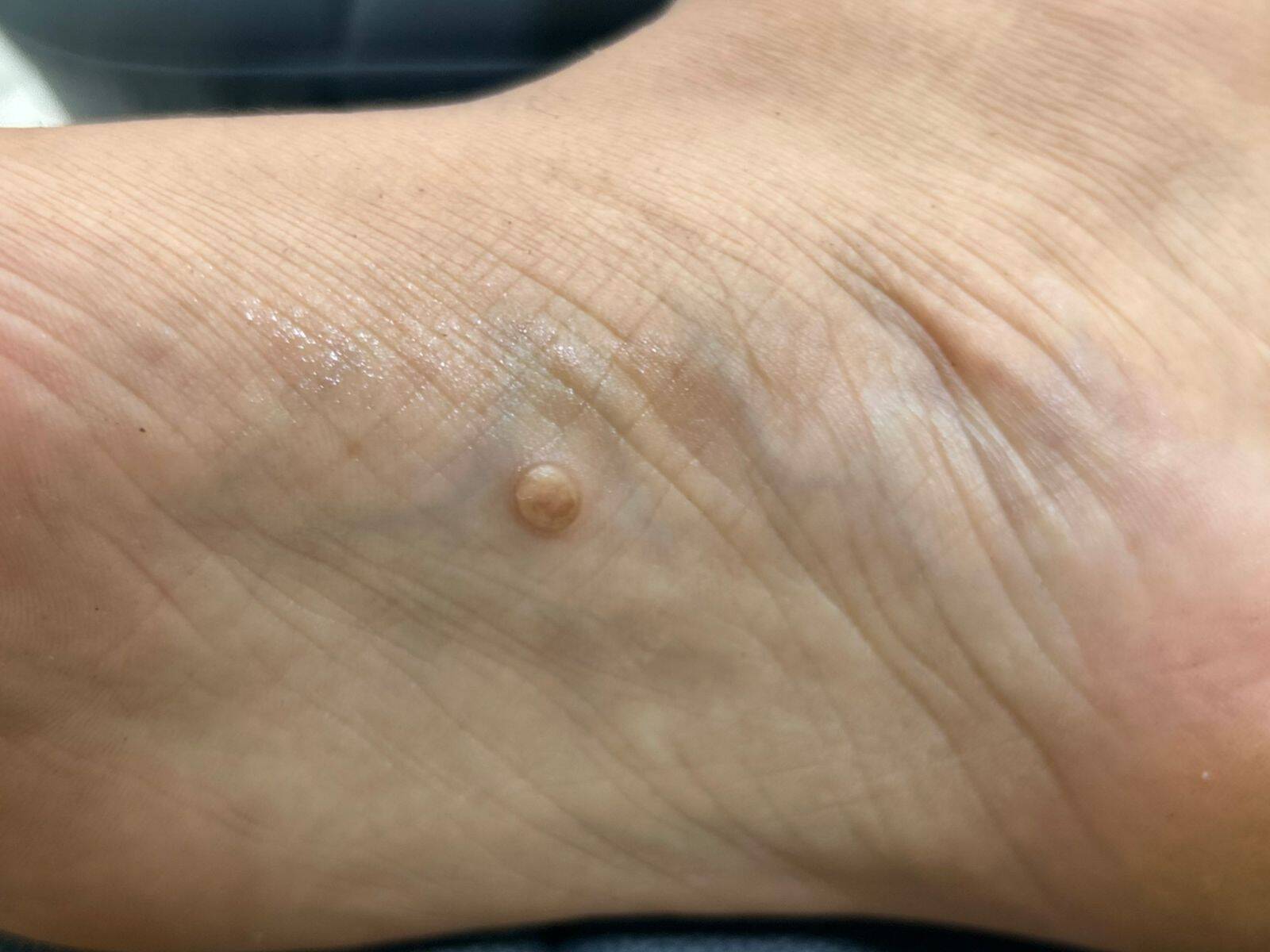
At G Square Skin & Aesthetics, we recently evaluated a patient with a painful solitary swelling on the sole, clinically suspected to be a dermatofibroma.
Let’s understand this condition in a simple and professional way.
What is a Dermatofibroma?
A dermatofibroma is a benign (non-cancerous) skin growth that develops from fibrous tissue within the skin (dermis).
Common characteristics:
- Firm, raised nodule
- Typically 0.5 to 1.5 cm in size
- Brown, reddish, or skin-colored
- Usually single (solitary lesion)
- Shows a “dimple sign” when pinched
Most dermatofibromas are painless, but in some cases, they can become tender, itchy, or painful.
Can Dermatofibroma Occur on the Sole?
Dermatofibromas are most commonly seen on the arms and legs, but occurrence on the sole is rare.
When present on the sole (a weight-bearing area), symptoms may include:
- Pain while walking
- Tenderness on pressure
- Difficulty wearing footwear
- Irritation due to repeated friction
Even a small lesion can cause significant discomfort because of constant pressure.
What Causes Dermatofibroma?
The exact cause is not fully understood, but possible triggers include:
- Minor skin injury
- Insect bites
- Repeated friction or trauma
- Local inflammation
These factors may lead to fibroblast overgrowth, forming a dermatofibroma.
Clinical Features of Dermatofibroma on the Foot
A dermatofibroma on the sole may present as:
- A firm, nodular swelling
- Painful solitary lesion
- Skin-colored to dark pigmented bump
- Slow-growing mass
- Tenderness when pressed
Because these features can overlap with other conditions, proper evaluation is essential.
Conditions That May Look Similar
A painful lump on the sole can mimic other skin conditions, such as:
- Plantar wart
- Fibroma
- Neurofibroma
- Eccrine poroma
- Dermatofibrosarcoma protuberans (rare but serious)
Accurate diagnosis is important to rule out more serious conditions.
How is Dermatofibroma Diagnosed?
Diagnosis is typically based on:
Clinical examination
Dermoscopy
Skin biopsy (if required)
A biopsy helps confirm the diagnosis by showing spindle-shaped cells and collagen bundles under the microscope.
Treatment Options for Dermatofibroma
Most dermatofibromas are harmless and do not require treatment unless symptomatic.
Treatment is recommended if:
The lesion is painful
Increasing in size
Frequently irritated
Cosmetically concerning
Available treatments:
1. Surgical Excision
Definitive treatment
Removes the lesion completely
Allows histopathological confirmation
2. Laser Therapy
Helps improve cosmetic appearance
3. Cryotherapy
Freezing the lesion with liquid nitrogen
Among these, surgical removal is the most effective option, especially for painful lesions on the sole.
Case Insight
At G Square Skin & Aesthetics, a patient presented with:
Painful swelling on the sole
Difficulty walking
No rapid growth
Based on clinical findings, a solitary dermatofibroma was suspected. The patient was advised surgical excision with biopsy for confirmation.
When Should You See a Dermatologist?
Consult a skin specialist if you notice:
- A new lump on the foot
- Persistent pain or tenderness
- A lesion that changes in size or color
- Difficulty walking due to a swelling
Early diagnosis ensures proper treatment and peace of mind.
Expert Skin Care in Hubli
At G Square Skin & Aesthetics, we provide:
- Skin tumor diagnosis
- Dermoscopy evaluation
- Minor skin surgeries
- Laser treatments
- Advanced dermatology care
📍 Book Your Consultation Today
Don’t let facial scars affect your confidence.
📞 Call/ WhatsApp: +91 91106 10004
📍 Visit: G Square Skin, Hair and Plastic Surgery Clinic, Hubli
🌐 Website: www.gsquareskinandaesthetics.in
👨⚕ Consult with Dr. Girish Kumar M