
Many people notice a dark patch around their neck and assume it's due to poor hygiene or dirt that simply won't wash away. They often try vigorous scrubbing, home remedies, or fairness creams without success.
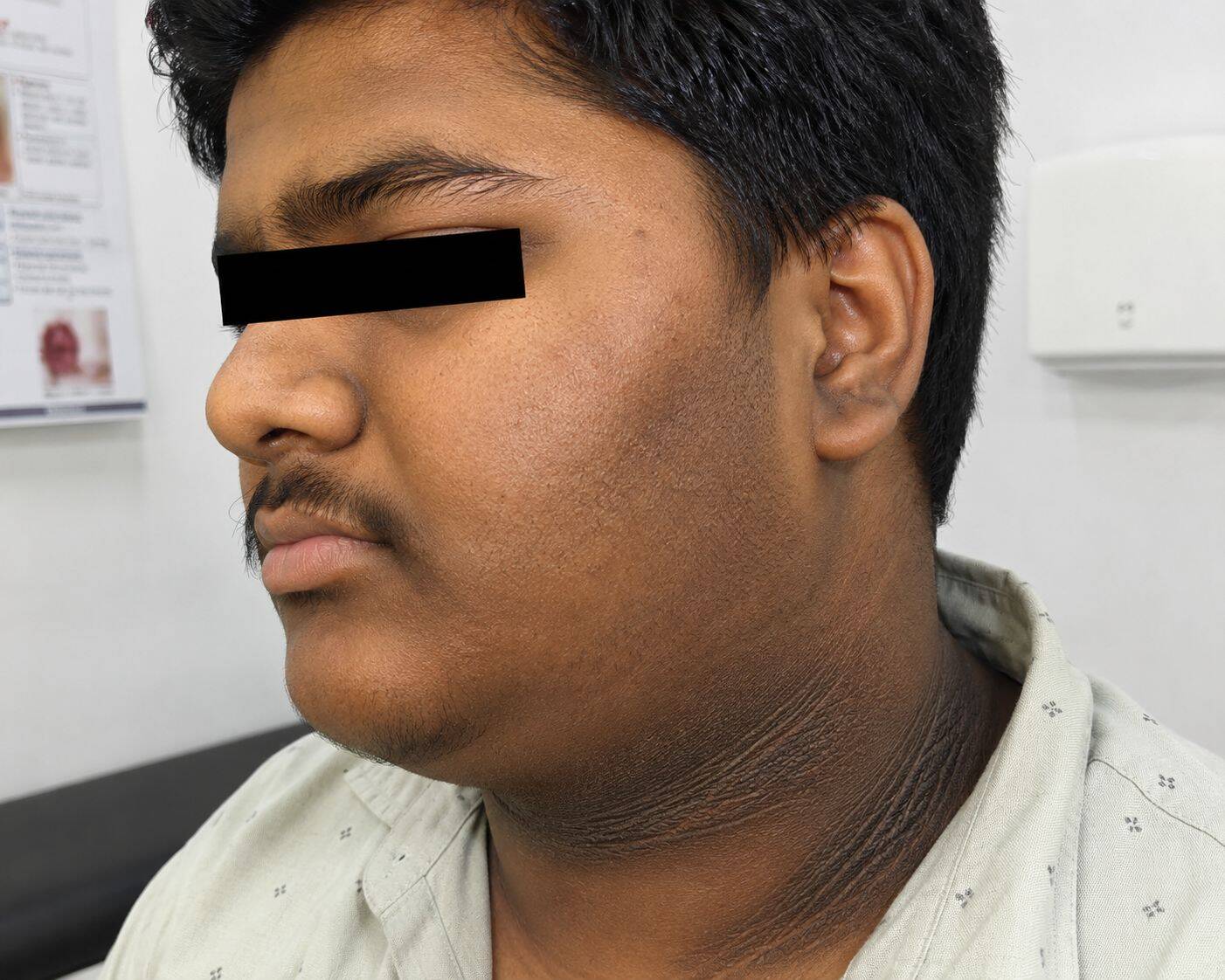
The truth is, persistent darkening around the neck may be a sign of Acanthosis Nigricans (AN)—a common skin condition that often indicates an underlying metabolic or hormonal problem rather than a skin disease alone.
At G Square Skin, Hair & Plastic Surgery Clinic, we frequently diagnose this condition and help patients treat both the skin changes and their underlying cause.
What Is Acanthosis Nigricans?
Acanthosis Nigricans is characterized by:
- Dark brown to black discoloration
- Thickened, velvety skin
- Symmetrical involvement
- Most commonly affecting skin folds
It usually develops on:
- Back of the neck
- Underarms
- Groin
- Knuckles
- Inner thighs
- Elbows
Importantly, Acanthosis Nigricans is not caused by poor hygiene and cannot be removed by excessive washing or scrubbing.
Why Does It Happen?
In most patients, the underlying cause is insulin resistance.
Insulin is the hormone responsible for controlling blood sugar levels. When the body's cells become resistant to insulin, the pancreas produces larger amounts to compensate.
Excess insulin stimulates skin cells to grow more rapidly and produce increased pigmentation, leading to the characteristic dark, velvety appearance.
This makes Acanthosis Nigricans an important early warning sign of metabolic disease.
Who Is at Risk?
Acanthosis Nigricans is more commonly seen in:
- Individuals who are overweight or obese
- People with prediabetes or Type 2 diabetes
- Women with Polycystic Ovary Syndrome (PCOS)
- Individuals with a family history of diabetes
- Patients taking certain medications such as steroids or hormonal therapies
Rarely, sudden onset of extensive Acanthosis Nigricans in older adults may be associated with internal malignancies, making prompt evaluation essential.
Common Symptoms
Patients usually notice:
✔ Dark patches around the neck
✔ Velvety or thickened skin
✔ Similar pigmentation in the underarms or groin
✔ Darkening over knuckles
✔ Cosmetic concern and embarrassment
Most patients do not experience itching or pain.
Is It Dangerous?
The skin changes themselves are harmless.
However, they often indicate serious underlying conditions such as:
- Insulin resistance
- Prediabetes
- Type 2 Diabetes
- PCOS
- Obesity-related metabolic syndrome
Identifying these conditions early allows timely intervention and helps reduce the risk of long-term complications.
How Is Acanthosis Nigricans Diagnosed?
At G Square Skin, Hair & Plastic Surgery Clinic, every patient undergoes a comprehensive evaluation.
Clinical Assessment
We assess:
- Medical history
- Weight changes
- Dietary habits
- Family history
- Menstrual history (in women)
- Skin examination
Investigations May Include
Depending on the individual patient:
- Fasting Blood Sugar
- HbA1c
- Fasting Insulin Levels
- Lipid Profile
- Hormonal Evaluation (for suspected PCOS)
- Body Mass Index (BMI)
- Waist Circumference Assessment
This helps identify the root cause rather than simply treating the pigmentation.
Treatment: Addressing the Root Cause
Successful treatment requires improving both skin health and metabolic health.
1. Lifestyle Modification
The most effective treatment includes:
- Healthy weight reduction
- Regular exercise
- Balanced nutrition
- Low Glycaemic Index (Low-GI) diet
Even a 5–10% reduction in body weight can significantly improve skin appearance.
2. Medical Management
When indicated, treatment may include:
- Medications to improve insulin sensitivity
- Hormonal treatment for PCOS
- Management of diabetes or prediabetes
3. Dermatological Treatments
To improve skin texture and pigmentation, your dermatologist may recommend:
- Prescription retinoids
- Azelaic acid
- Kojic acid
- Glycolic acid formulations
- Medical depigmenting creams
All treatments should be used under professional supervision.
4. Advanced In-Clinic Procedures
For faster cosmetic improvement, we may recommend:
- Chemical Peels
- Pigmentation Peels
- Laser Pigmentation Treatment
- Medical Skin Brightening Procedures
These treatments are customized according to your skin type and severity of pigmentation.
When Should You See a Dermatologist?
Consult a dermatologist if you notice:
- Persistent darkening of the neck
- Pigmentation that doesn't improve with washing
- Dark underarms or groin
- Sudden onset of neck pigmentation
- Associated symptoms like irregular periods, acne, weight gain, or excessive facial hair
Early diagnosis can help detect metabolic disorders before they progress.
Why Choose G Square Skin, Hair & Plastic Surgery Clinic?
At G Square Clinic, we believe that successful treatment starts with understanding why the skin has changed.
Our approach includes:
✔ Accurate diagnosis
✔ Root-cause treatment
✔ Evidence-based dermatology
✔ Personalized treatment plans
✔ Advanced pigmentation procedures
✔ Collaboration with endocrinologists and gynecologists when required
We don't just lighten the skin—we help improve your overall health.
Final Takeaway
A dark neck is not always due to dirt or poor hygiene. It may be your body's earliest warning sign of insulin resistance, diabetes, or hormonal imbalance.
Ignoring these changes can delay diagnosis of important medical conditions.
With early evaluation and appropriate treatment, Acanthosis Nigricans can improve significantly, while also reducing your long-term health risks.
Healthy skin starts with a healthy body.
📞 Book Your Consultation Today
If you have persistent darkening of the neck, underarms, or other skin folds, don't ignore it. Early diagnosis and treatment can improve both your skin and your overall health.
👨⚕ Dr. Girish Kumar M. Chalawadi
Consultant Dermatologist & Hair Specialist
📞 Call / WhatsApp: +91 91106 10004
📍 Visit: G Square Skin, Hair & Plastic Surgery Clinic, Hubballi
🌐 Website: www.gsquareskinandaesthetics.in
Book your appointment today for expert evaluation and personalized treatment for pigmentation, insulin resistance-related skin changes, and other dermatological concerns.