
Pityriasis alba is a benign and self-limiting skin condition most commonly seen in children aged 3 to 12 years.
It presents as light-colored or whitish patches, usually on the:
- Cheeks
- Upper arms
- Neck
- Upper trunk
These patches become more noticeable in darker skin tones and after sun exposure due to the contrast with surrounding skin.
✔️ Key Points About Pityriasis Alba:
- It is not contagious
- It is not vitiligo
- It is usually related to dry or atopic skin
- With proper moisturization and care, it improves on its own
👦 Case Summary
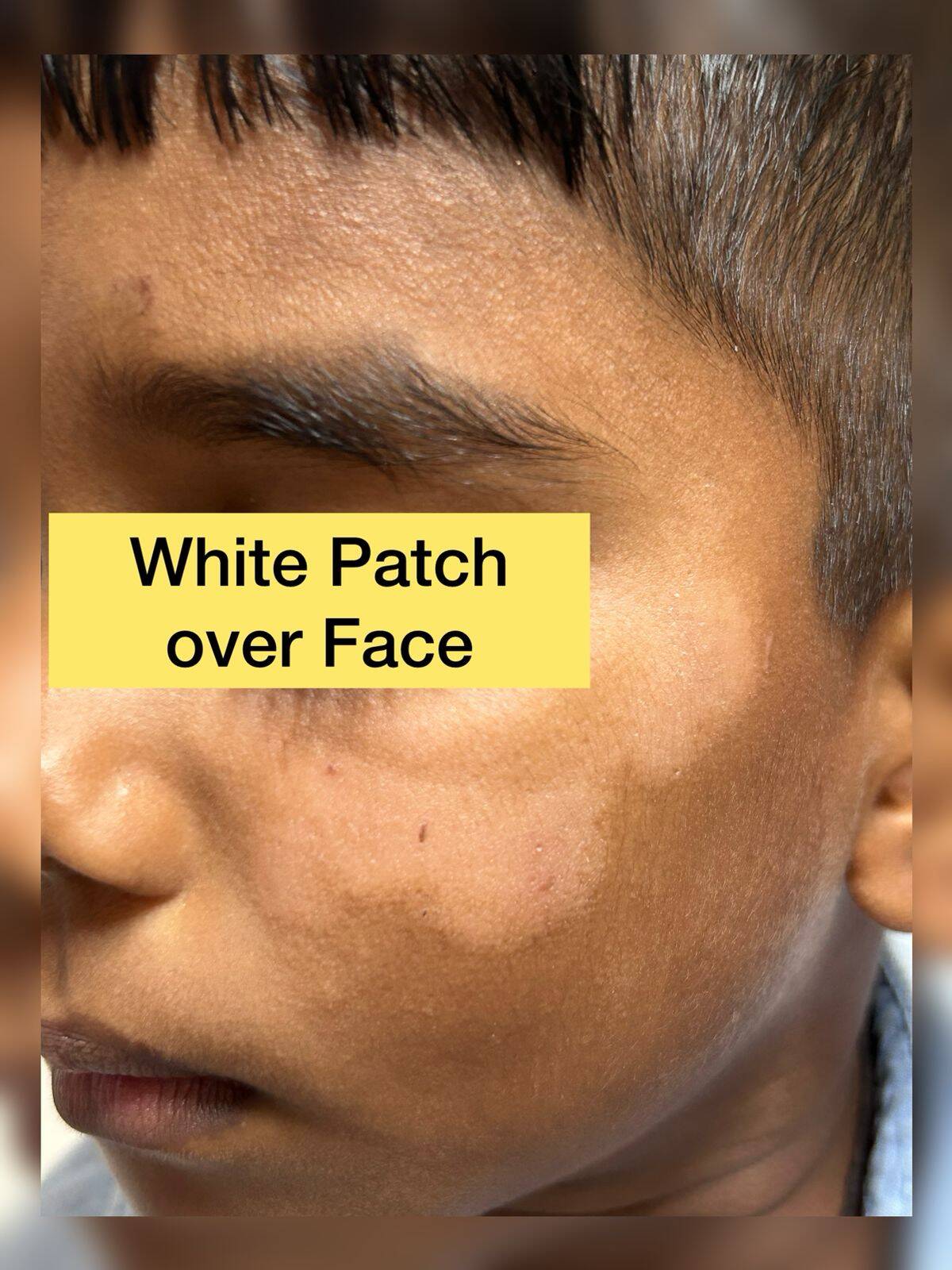
A 4-year-old boy was brought to G Square Skin & Hair Clinic, Hubli, with a gradually developing white patch on the left cheek for the past three weeks.
The parents reported:
- Mild itching
- No pain or scaling
- No previous history of skin conditions
- No exposure to irritant creams
🔍 Clinical Examination
The child had:
- A single, ill-defined hypopigmented patch
- Mild surface dryness
- No scaling or redness
- No signs suggestive of fungal infection, vitiligo, or steroid cream damage
🧩 Diagnosis
Based on the clinical features, the child was diagnosed with Pityriasis alba.
This condition is often considered a mild form of childhood atopic dermatitis, commonly seen in children with dry or sensitive skin.
No blood tests or skin tests were required.
💊 Treatment & Maintenance Care
Since Pityriasis alba is harmless and self-resolving, treatment focuses on:
- Moisturizing the skin
- Repairing the skin barrier
- Reducing dryness and itching
- Preventing recurrence
🔹 1. Moisturization & Barrier Repair
Use fragrance-free, ceramide-rich moisturizers
Apply 2–3 times daily, especially after bathing
Avoid strong soaps, foaming washes, and excessive scrubbing
A consistent moisturizing routine is the most important step.
🔹 2. Mild Anti-inflammatory Care
If the patch is itchy or inflamed:
Mild topical anti-inflammatory creams
Steroid-free options can be used when appropriate
These help in faster recovery.
🔹 3. Sun Protection
Use a child-safe broad-spectrum sunscreen when outdoors
Helps reduce tanning around the patch, making it less visible
🔹 4. Nutrition Support
- Healthy skin needs good nutrition. Encourage:
- Vitamin B-complex foods (whole grains, pulses)
- Vitamin E sources (almonds, spinach)
- Zinc-rich foods (dal, nuts)
- Omega-3 healthy fats (flaxseed, ghee, nuts)
- Hydration plays an important role in skin repair.
🌈 Outcome
After three weeks of:
Regular moisturization
Gentle skin care
Sun protection
…the patch showed significant improvement, with only mild dryness remaining. Parents were advised to continue daily moisturization to prevent recurrence.
🩺 Key Takeaway
Pityriasis alba is a completely harmless and treatable condition.
With:
✔️ proper moisturization
✔️ gentle skin care
✔️ sun protection
✔️ balanced diet
…children recover fully without any long-term complications.
Early evaluation ensures correct diagnosis and avoids unnecessary worry or wrong treatments.
👨⚕️ Expert Pediatric Dermatology Care in Hubli
At G Square Skin & Hair Clinic, Hubli, we provide specialized care for childhood skin conditions, ensuring safe, accurate, and child-friendly treatment plans.
If your child develops white patches, dry skin, or unexplained marks, consult a qualified dermatologist for proper guidance.
📍 G Square Skin & Hair Clinic – Hubli
📍 Visit: G Square Skin, Hair & Aesthetic Clinic – Hubli, Karnataka
📞 Call/WhatsApp: 91106 10004
🌐 Website: www.gsquareskinandaesthetics.in